
Last updated November 2, 2026
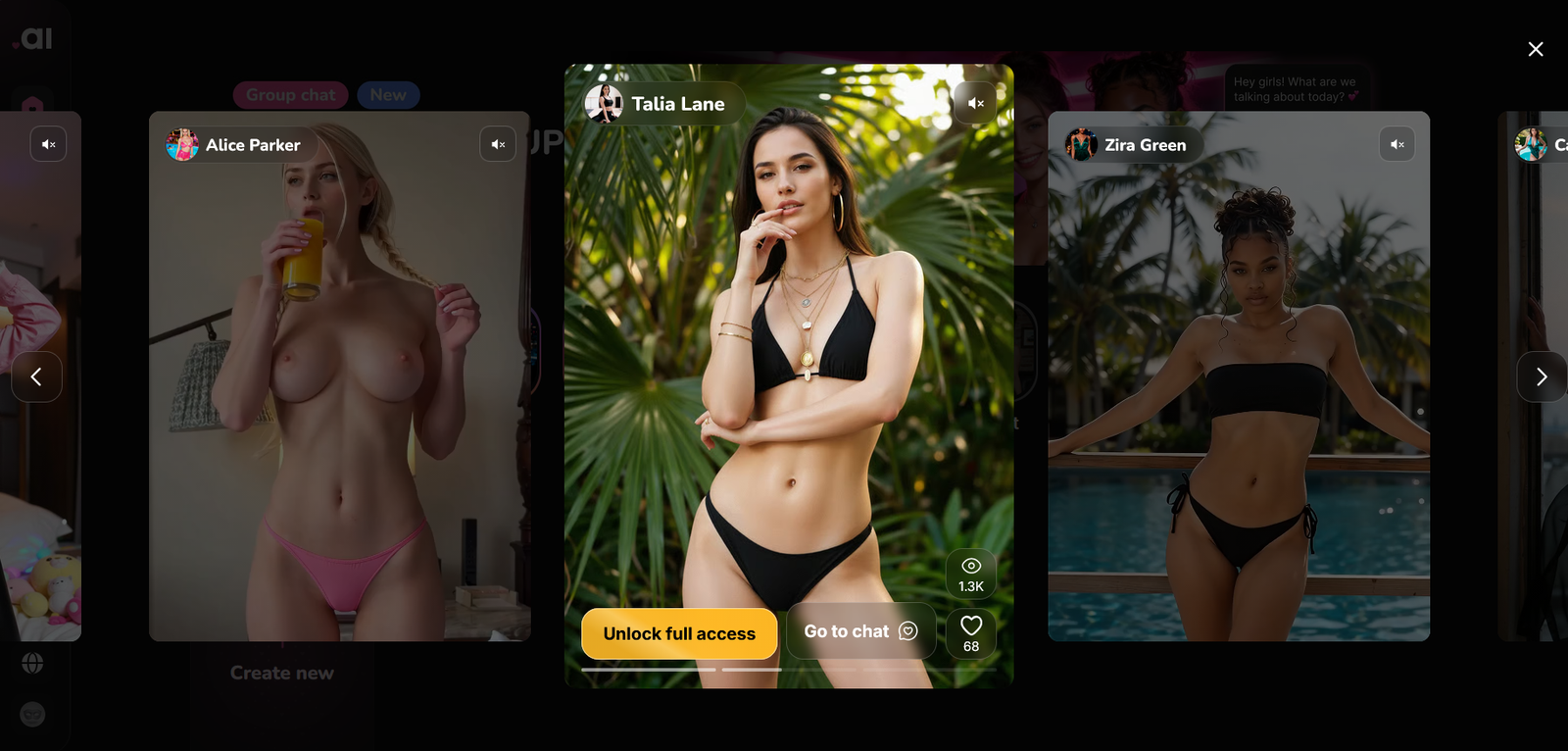
This Lovel AI review 2026 goes through every major part of the platform and then puts it side by side with the other AI companions we’ve already tested.
Affiliate Disclosure: This website contains affiliate links, which means I may receive a small commission if you sign up through a link on this page. This comes at no extra cost to you and helps support the website. My reviews and recommendations are based on my own research and opinions.
Lovel AI works the same way most of these companion apps do — it’s powered by generative AI that builds replies, images and voice notes on the spot from whatever you’re saying and the character you’ve set up. It’s not reading from a fixed script. If you want a plain explanation of what generative AI actually is and how it works, the Wikipedia page on generative artificial intelligence covers it clearly.
Lovel AI Pros & Cons
Chat writing stands out — replies feel specific and stay in character
Solid roleplay library with actual scenarios that can run over multiple parts, not just open chat
Memory editing is available on the basic paid plan, so you can fix what it remembers
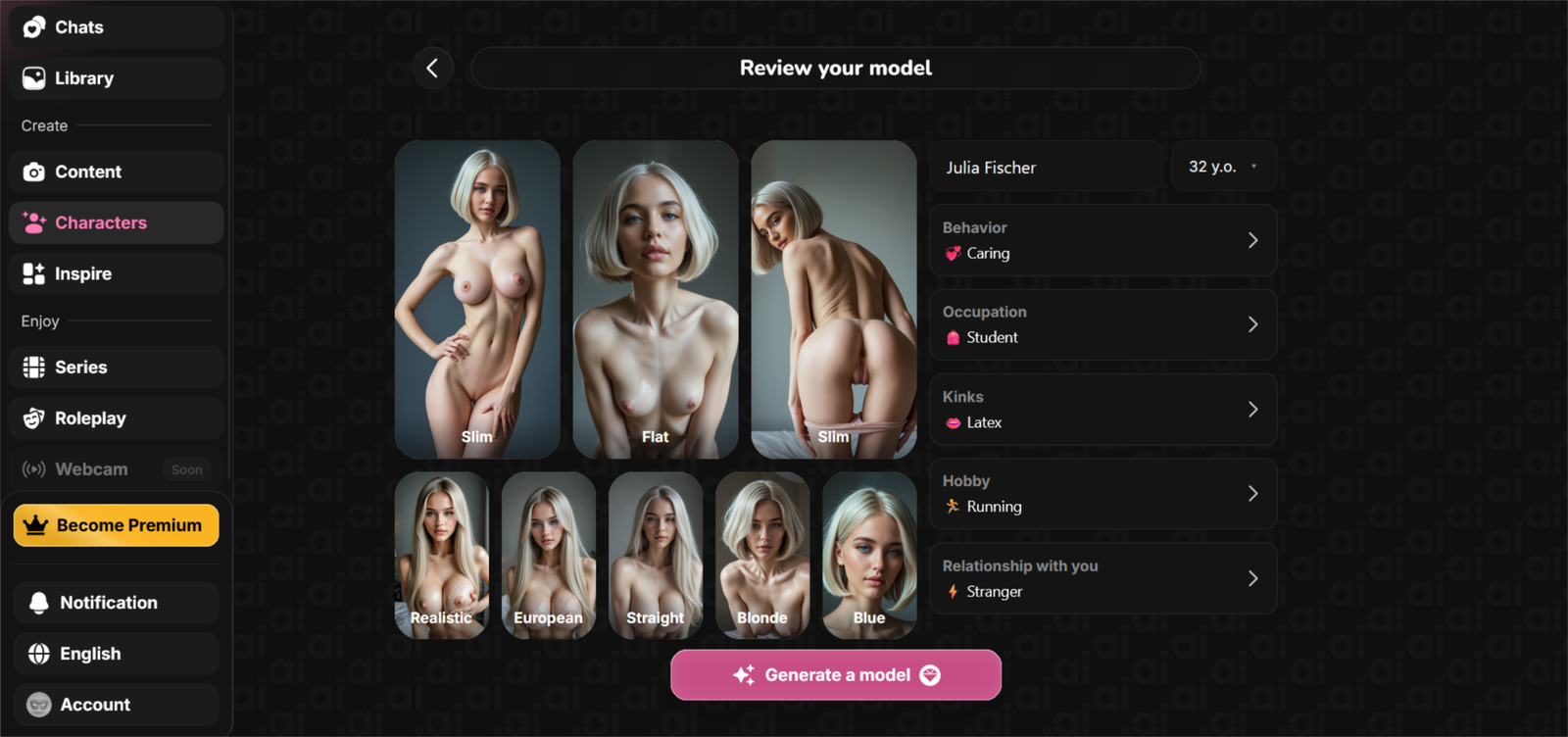
Character builder is thorough (nine steps covering looks, personality, background)
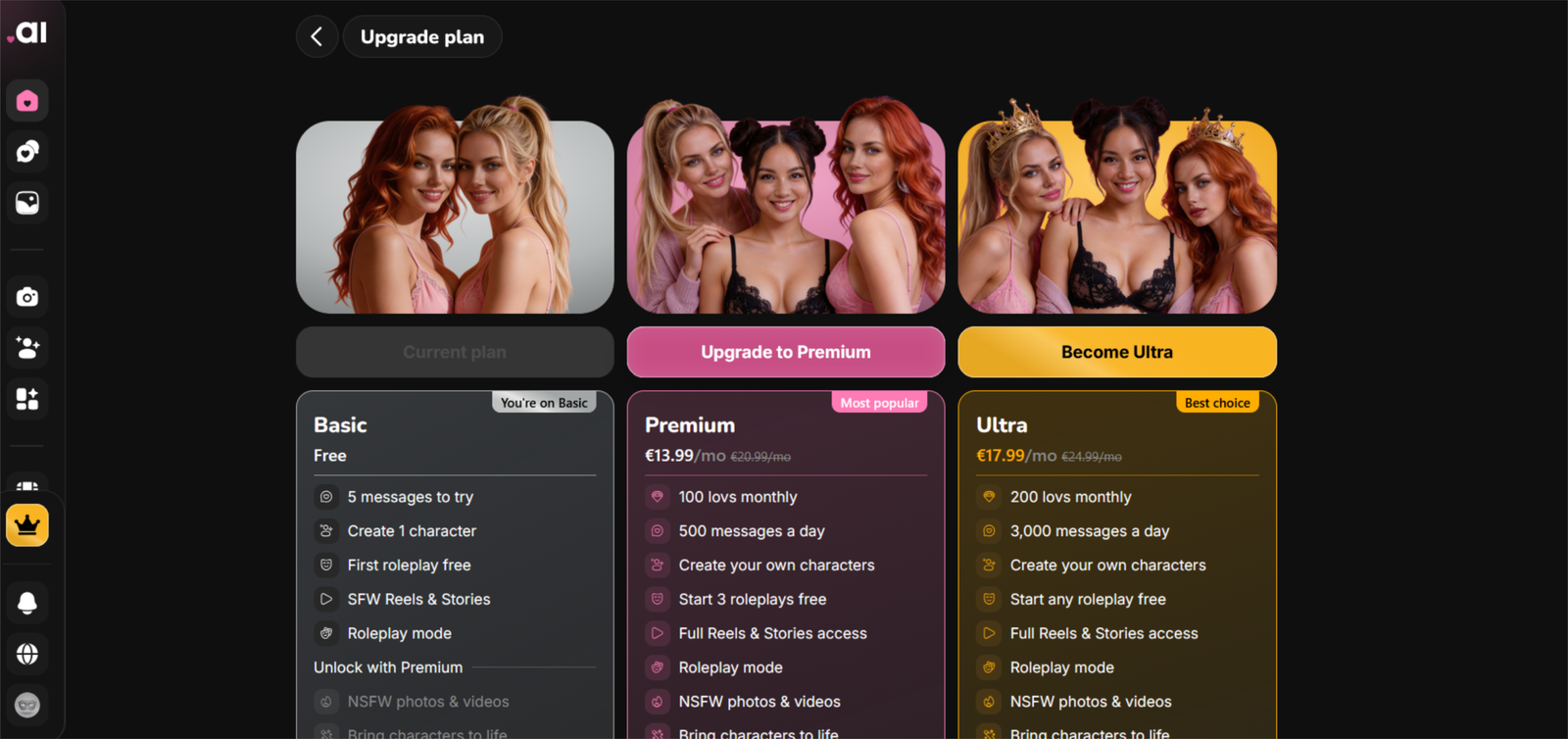
Free tier is basically a teaser: only five messages total, one character, one roleplay, and no image generation at all
NSFW content and full media are locked behind Premium
Lovs (the in-app currency) get spent on images and some roleplays, so costs can creep up if you generate a lot
Some regions get blocked or see a service unavailable message
Lovel AI is strongest for images or free usage, and the free tier is too tight to really test anything properly. This one suits people who care more about solid conversation and guided roleplay than flashy visuals or a generous free trial.
Lovel’s Free Tier Is Token-Limited
Want to try something with unlimited chat and a deeper builder? Lovel’s free chat is limited and longer memory + faster images are paywalled. I use Secret Desires when I want unlimited text on paid, faces that stay recognisable across images, and real two-way voice calls you can interrupt — plus realistic and anime styles, not just photoreal.
Try Secret Desires Instead →Unlimited text + same face + real calls.
Testing methodology
I put every AI companion through the same set of real-world tests. There are ten main areas I look at, with 40 specific things I check in total.
You can see exactly how I score each area on the about ai companion kit page.
Full results for each app are in its individual review. Comparison pages are just about the differences that stood out when I used them side by side.
Table of Contents
I spent my usual time on daily chats and roleplay sessions, the thing that stood out most was how specific and consistent the replies felt. Lovel leans hard on solid conversation and ready-made scenarios, so you get dropped into something that already has some momentum instead of starting from a blank page. The free messages run out fast, but once you’re past that the writing holds up and the memory tools actually help the relationship build.
OurDream still edges it if you want stronger image and short video generation built right into the chat. Kindroid feels tighter on pure conversation flow and long-term personality consistency across weeks. CrushOn gives you a bigger pure-text roleplay library with almost no friction. Lovel sits in a solid middle ground: better chat quality than most, a decent roleplay catalogue, and memory editing available without jumping to the top plan.
If you want the full side-by-side details, these reviews cover the exact points that came up while testing Lovel:
- OurDream AI review 2026: is it worth it? — stronger on image and short video generation
- Kindroid AI Review: Is It Worth It? Features, Pricing & Real Testing — tighter pure conversation flow and long-term personality consistency
- CrushOn AI review for NSFW roleplay features — bigger pure-text roleplay library with almost no friction
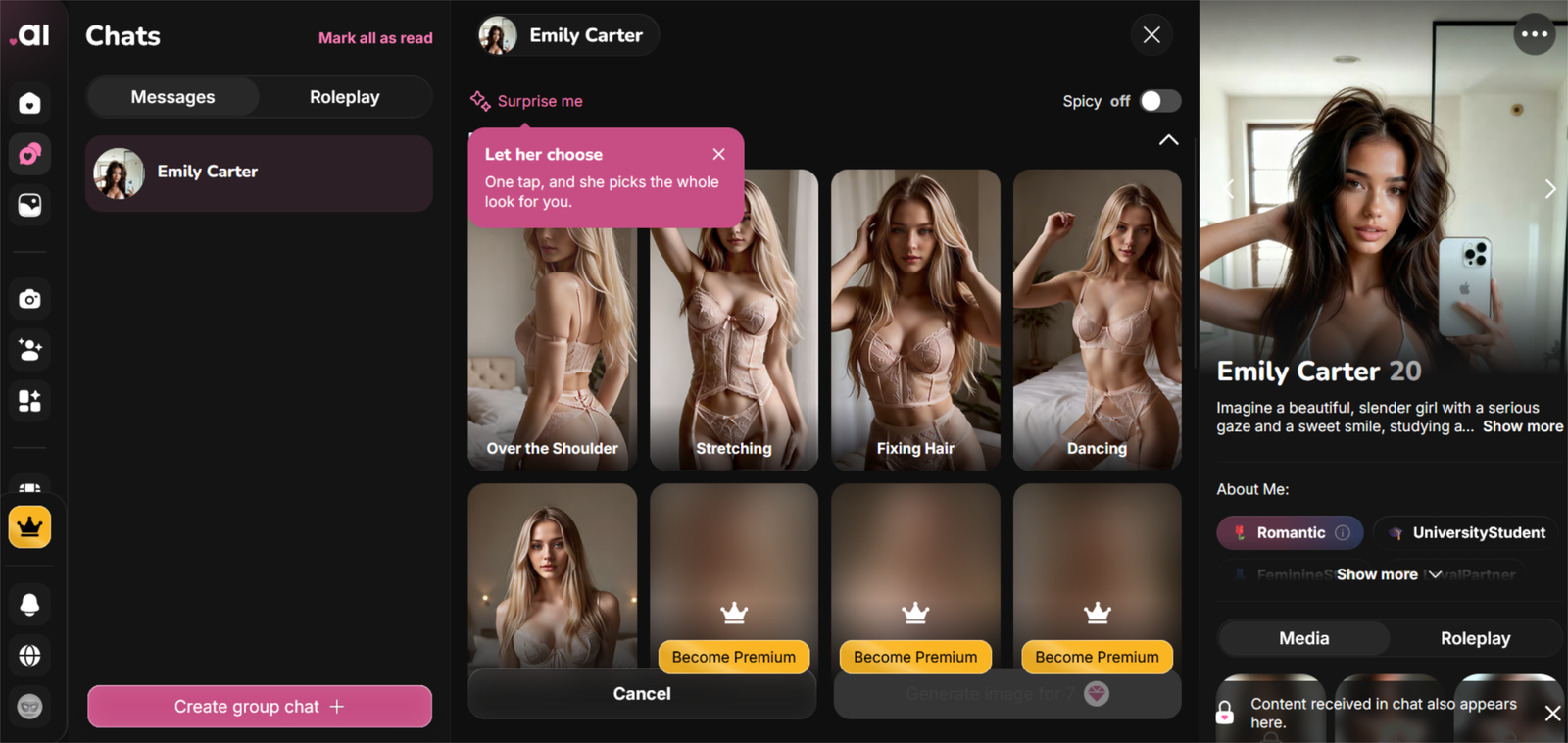
Who Lovel AI works best for
A few weeks of regular use showed that Lovel works best for adults who put conversation quality and structured roleplay ahead of everything else. The free allowance runs out almost immediately, so the platform rewards people who are already prepared to subscribe.
You prioritise natural, detailed replies
The chat tends to notice small personal details and keep the same tone across longer exchanges. If that matters more to you than polished images, this is where it stands out.
You prefer starting inside a prepared story
Instead of inventing the whole setup yourself, you can choose from existing scenarios that already have context and direction. That suits anyone who wants momentum from the first message.
You’re happy to move past the free limit
Five messages give only a quick taste. The real features — fuller roleplay access and better continuity — sit behind the paid plans, so it fits users who know they want more than a short trial.
You like being able to shape what the companion remembers
Memory editing is available on the entry paid tier rather than locked behind the highest plan. That helps longer chats stay coherent without the steepest monthly cost.
Testing period: October 28 – November 5, 2026
Tester: Simon Norman
Testing approach: 10 categories / 40 data points
Account: Premium / Free
Devices: Desktop
How Lovel AI looks on mobile
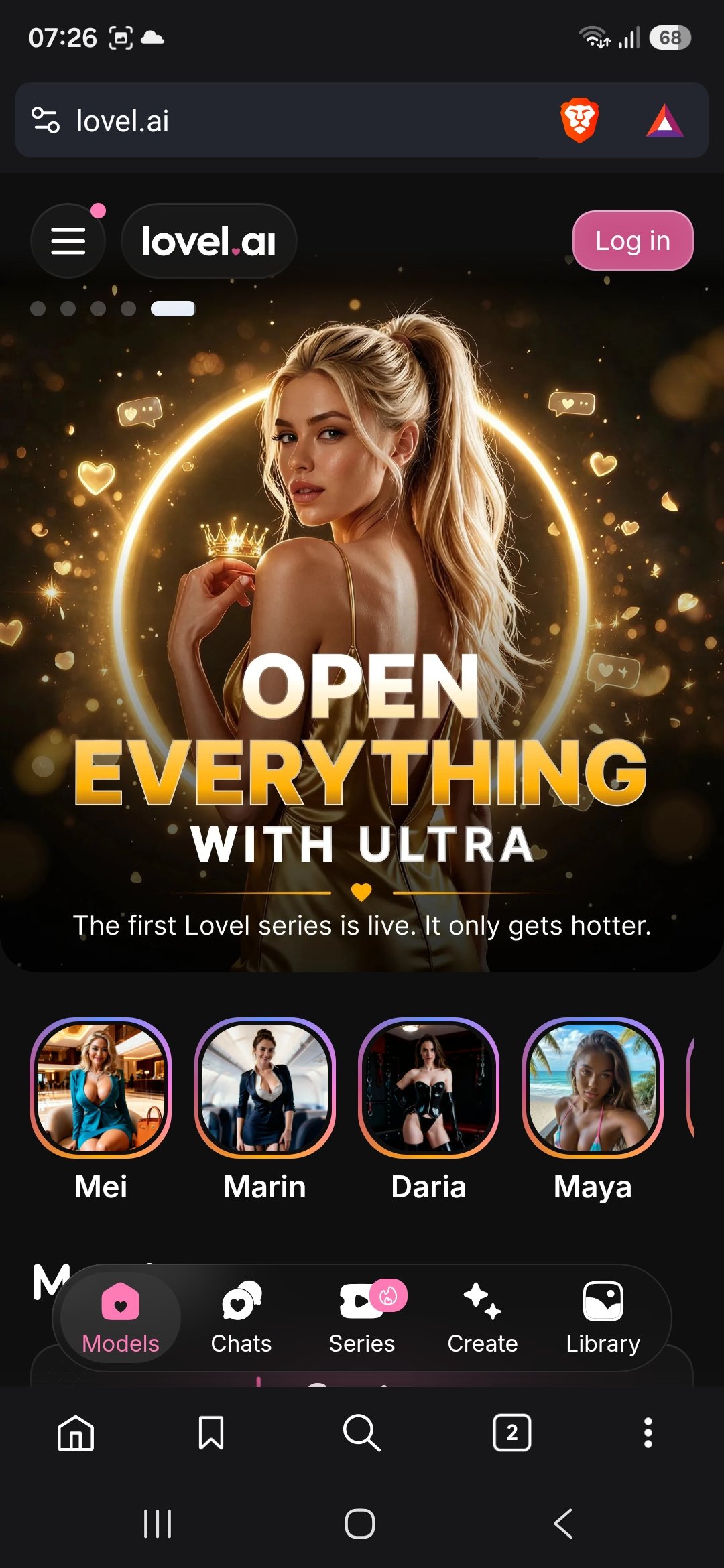
Opening lovel.ai on a phone lands you on a dark, polished home screen that feels more like a dating or social app than a typical AI site.
The top bar is simple: menu on the left, the lovel.ai logo in the middle, and a pink Log in button on the right.
A large promotional banner sits front and centre, showing a blonde character with a glowing crown and the text “OPEN EVERYTHING WITH ULTRA”.
Below that is a clean row of circular character cards (Mei, Marin, Daria, Maya and more) that you can swipe through.
The bottom navigation is clear and thumb-friendly: Models, Chats, Series, Create and Library.
What stands out on mobile is how little effort it takes to move around. The icons are well spaced, the character circles are easy to hit, and the whole layout stays readable without any pinching or awkward scrolling.
I signed up through the browser in the usual way. The process was straightforward enough, though the free allowance of just five messages kicked in immediately and felt tighter than most of the other apps I’ve tested. There was also a brief regional block on one of my connections that forced a quick VPN switch before the site would load properly.
Once past the free limit I upgraded so I could properly use the full chat, character tools and media features over a couple of weeks of regular daily sessions.
Memory was checked by bringing up earlier details in later conversations and trying the editing tools to see if they made a real difference to consistency.
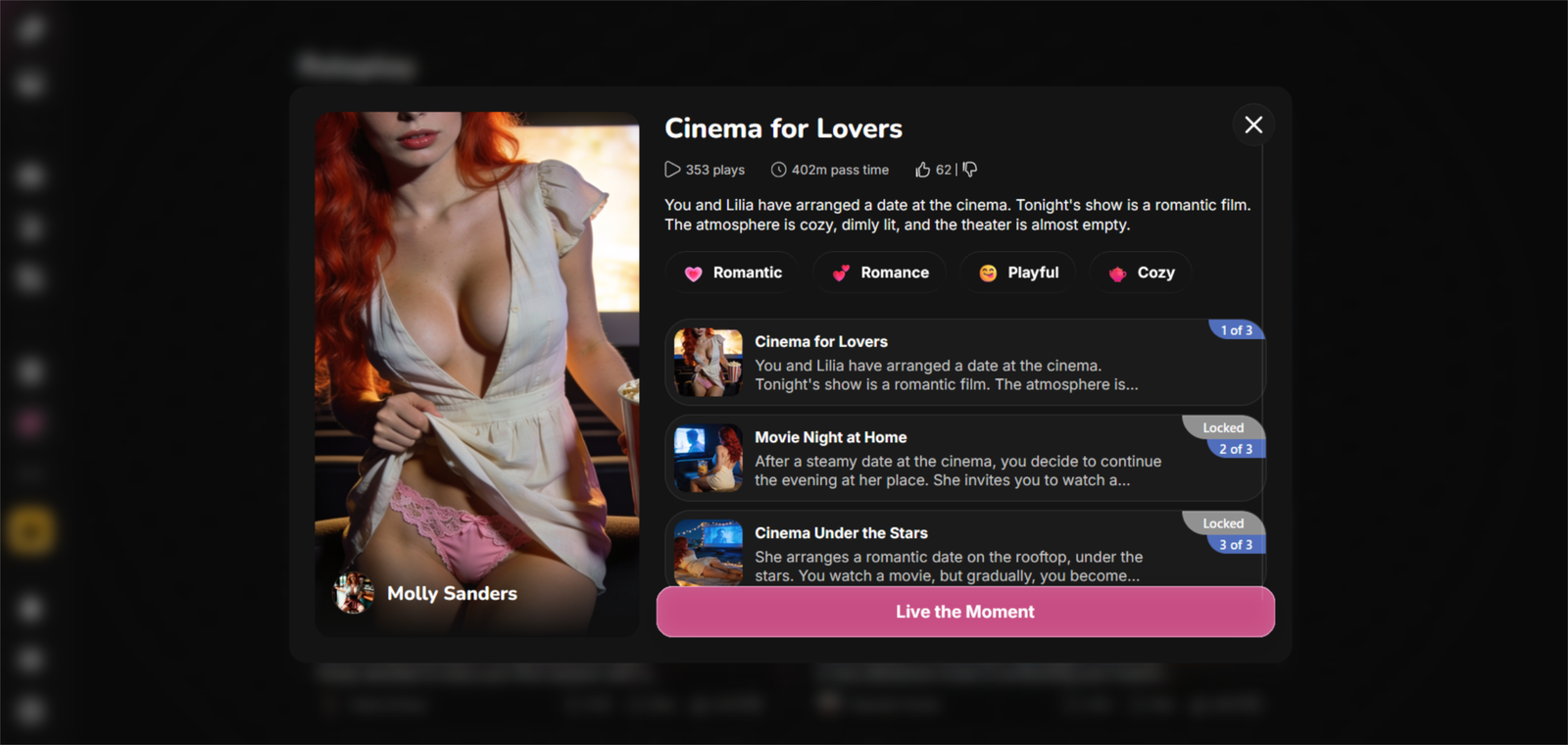
Roleplay got tested by picking a few different scenarios from the library and running them for longer stretches to see how well the stories stayed on track.
The LOVS system was noted mainly by watching how fast the credits disappeared once I started generating images or unlocking extra roleplay content.
What worked well and what didn’t
The characters are one of the stronger parts of Lovel. The house roster mixes realistic and anime styles, and most of the bios actually feel written rather than slapped together. You get a sense of personality and background before you even start chatting. The nine-step builder also gives you solid control if you want to make your own — looks, personality traits, occupation, starting dynamic — without feeling overwhelming.
Chat quality sits near the top of what I’ve tested. Replies tend to stay specific and in character. It notices small details and keeps the same tone across longer exchanges, which is rarer than it should be. The roleplay library helps too. Instead of always starting from zero, you can drop into prepared scenarios that already have some direction and keep going across multiple parts.
Memory editing is available once you pay, and it actually does something useful. You can correct or add details so the companion doesn’t keep forgetting basic things.
The free experience is the biggest weak point. Five messages is barely enough to get a feel for the writing, and image generation is completely locked until you upgrade. LOVS credits also disappear faster than expected once you start generating pictures or unlocking extra roleplays. The site blocked me once on a normal connection, which was annoying until I switched networks.
Overall the core chat and character side feel polished. The limits around free use and media generation are the parts that hold it back.
My Memory Score: 8.0/10
Same-conversation memory
Inside one extended chat the companion kept track of details without trouble. Earlier comments about preferences or small facts were referenced correctly later in the same session.
8.7/10
24-hour memory test
Coming back the next day, the main points were still present. A few lighter details had dropped off, but nothing critical was completely lost.
8.2/10
3+ day memory test
After several days the stronger personal information continued to surface. Smaller one-time remarks were more hit-and-miss. The ability to edit memory on the paid plan made it easier to lock in the important pieces.
7.6/10
Unprompted memory
The companion sometimes brought up earlier topics on its own, which felt natural when it landed. It didn’t happen every time, but it was more consistent than a simple reset each session.
7.9/10
Reliable enough for ongoing chats and stronger than many apps once you’re past the free limit. The editing tools give it a useful edge for longer-term use.
My Personality Score: 8.0/10
Staying in character:
Most of the time the companion stuck to the personality I had set. It didn’t suddenly switch styles or drop the role mid-chat the way some apps do.
8.3/10
Tone and emotional range:
It handled different moods reasonably well. A more playful character stayed light, while a quieter one didn’t jump into over-the-top reactions. The range felt natural rather than forced.
7.8/10
Consistency across sessions:
Coming back days later, the same tone and behaviour were still there. It didn’t reset into a bland default version of itself.
8.1/10
Handling contradictory instructions:
When I gave mixed signals or changed direction, it usually adapted without completely breaking character. It wasn’t perfect, but it recovered faster than a lot of platforms.
7.5/10
My roleplay score: 8/10
Roleplay is where Lovel is at its best. The library does a lot of the work: you start inside a scenario that already has a setting and a direction, so you’re not building a story out of a blank chat. The replies stayed in character and kept their detail. It loosened up when I changed the story a lot, and over very long scenes. On my scale that puts it level with Candy AI and Dream Companion (8), just under OurDream (8.5), and ahead of DreamGF (7.5).
I ran the same checks I use on every app.
Staying in the scene
I picked a few scenarios from the library and played each one for a while. Lovel kept the setting and the character’s role in place, and didn’t slip back into generic chat or step out of the story to talk to me as itself.
My result: 8.5/10. Reliable once the scene is set.
Handling sudden changes
I changed direction mid-scene: a new location, a twist, a character turning up out of nowhere. Small turns it followed straight away. Bigger swings took a couple of replies before it settled into the new situation.
My result: 7.5/10. Fine with nudges, slower with big changes.
Longer scenes
I carried one scenario over several parts to see if the thread would hold. It kept the plot going for a good stretch, but the replies got a little less specific the longer I went, and I had to steer more near the end.
My result: 7.5/10. Holds a long scene, with some thinning.
Creative freedom and detail
Lovel adds plenty of setting and small actions inside a scenario. It stays inside the lane the scenario sets, though, so it was less free-roaming than I’d like if I wanted to take the story somewhere completely different.
My result: 8/10. Good detail, less free-roaming.
My NSFW score: 8.0/10
Adult stuff on Lovel.ai opens up properly once you’re on a paid plan. It doesn’t keep cutting you off or turning polite mid-scene the way a lot of other apps do. On free you’re basically stuck with SFW only and about five messages, so you can’t really test anything explicit without upgrading.
I checked it the same way I always do.
Does it actually stay open?
I pushed chats into explicit territory and watched for soft blocks or sudden tone shifts. On Premium the scene just kept going. No “let’s keep this appropriate” messages. The character stayed in it instead of pulling back. Free tier locks it the second things get spicy.
My result: 8.5/10
How far will it go?
I tried more detailed and intense requests. It followed without moralising or flattening the tone, as long as it stayed inside the normal legal lines. Stronger character setups held the explicit feel better. Weaker ones got a bit generic faster.
My result: 8/10
Does it hold up over longer scenes?
I ran longer explicit roleplay sessions to see if the openness faded. It mostly stayed consistent. Any drop-off felt more like normal memory limits than the filter suddenly kicking in. The roleplay library helps keep longer intimate stories going.
My result: 8/10
Visuals in adult contexts
NSFW photos work on paid plans through the image studio and sit right in the chat. They cost LOVS credits. Quality is decent and usually matches the character, though it’s not perfect every time. Short video is available but still limited or in beta depending when you try it.
My result: 7.5/10
Overall it’s solid for NSFW once you pay. Writing quality helps the scenes feel natural instead of stiff. Not the freest option out there, and the free tier gives you almost nothing adult to test, but if you want chat, roleplay and media that actually work together without constant interruptions, it holds up well.
My voice score: 7.5/10
Voice on Lovel.ai is one of the better extras once you’re on a paid plan. The messages sound more natural than what you get on Candy AI or OurDream, with clearer pacing and a bit of actual emotion instead of flat synthetic speech. You can switch styles to fit the character. Free users don’t get it at all.
I checked it the same way I do on the others.
How natural does it sound?
I listened to replies across a few characters and different moods. It sits above Candy’s usable-but-still-robotic feel and clearly ahead of OurDream’s more synthetic edge. Not quite as smooth as the better Muah calls, but for simple voice messages it’s one of the cleaner ones I’ve heard.
My result: 8/10
Does it stay connected to the conversation?
When I asked for a voice reply after text, it usually picked up the current chat and stayed in character. Same kind of connection you get on Candy when it works, without the occasional disconnect that shows up on weaker systems.
My result: 8/10
Latency and real-time feel
There’s a short pause before it starts, which is normal for message-style voice. It doesn’t do proper live phone calls the way Muah does, so you don’t get that back-and-forth flow. For occasional voice notes it’s fine.
My result: 7/10
Availability and cost
Locked behind paid plans, same as most of the competition. Once unlocked it works without extra steps. Heavier use can still eat into your allowance, but it’s not as aggressive as some of the coin-heavy platforms.
My result: 7.5/10
Overall the voice is strong enough to make chats feel more personal when you want it. It’s better than Candy and OurDream for natural-sounding messages, though it doesn’t match Muah if real-time calls are what you’re after. Solid extra, not the main reason to pick the app.
My visuals score: 7/10
Visuals on Lovel.ai are solid once you pay, but they sit a clear step behind Candy AI and a bit behind OurDream. The five-step studio is actually well thought out — you pick character, SFW/NSFW, outfit, pose and scene, then get an editable prompt. Free users get nothing. Image generation is completely locked even for safe requests.
I tested it the same way I do on the others.
Character looks consistent across generations
I generated multiple images of the same character in different outfits and settings. It usually keeps the general look, but faces and details can shift more than they do on Candy. OurDream holds consistency a bit tighter too. Not bad, just not the strongest.
My result: 7/10
Follows prompts accurately
The studio makes it easy to control the basics. Clear requests for clothing or pose mostly come through. More detailed or complicated prompts sometimes miss smaller things, same kind of occasional miss you see on OurDream. Candy is still more reliable here.
My result: 7.5/10
Quality of NSFW / realistic images
Paid plans unlock NSFW. The images look clean and the realistic ones can look like actual photos at first glance. Quality is good, not top-tier. Candy still produces sharper and more consistent results, especially on explicit stuff.
My result: 7.5/10
Short video / motion
Video exists on paid plans but feels limited compared to Candy’s Live Action clips or even OurDream’s short videos inside the chat. Some reviews still call it beta or “coming soon” for full features. Usable when it works, not a highlight.
My result: 6.5/10
Cost and limits
Everything runs on LOVS credits. Premium gives you a monthly pile, Ultra more. Heavy image use burns through it the same way coins disappear on OurDream. Light use is fine.
My result: 7/10
Overall the visuals are good enough if chat and roleplay are your main focus. The studio is nicer to use than most, but if consistent high-quality images and short video are what you care about most, Candy still wins that side by a clear margin.
My long-term conversation score: 8.5/10
This is one of the clearer strengths on Lovel.ai. It holds details across days and sessions at about the same level as OurDream. Both sit clearly above Candy, where things start dropping after a week. Lovel also lets you edit the memory on Premium, which is a useful extra.
I tested it the same way I always do.
Coming back after a day
I left conversations and returned roughly 24 hours later. Names, preferences and the main story points usually came back without me having to re-explain everything. Same kind of hold you get on OurDream.
My result: 8.5/10
Gaps of several days
I left longer breaks of three days or more. Broader context and important facts still showed up more often than they do on session-reset apps. Smaller details could fade, but the overall thread usually survived. Matches OurDream here too.
My result: 8/10
Natural callbacks
I watched for whether the character brought up earlier events without being prompted. It happened about as regularly as on OurDream, and more often than on Candy or CrushOn.
My result: 8/10
Does it still feel like the same companion?
After multiple sessions the character generally kept the same personality and relationship feel. It didn’t flatten into a generic chatbot as quickly as some of the others. Memory editing on Premium helps when something goes off.
My result: 8.5/10
Overall Lovel handles ongoing conversations at the same level as OurDream. Memory is the main reason longer chats feel continuous instead of starting over every time you open the tab.
My customization score: 8.5/10
Customization on Lovel.ai sits at the same level as OurDream and Candy. You get a proper nine-step builder that covers looks and personality in enough detail that two different characters can actually feel different. It’s not as deep as Kindroid, but it’s solid and usable.
Depth of the character builder
I went through the full setup for new characters. You pick style (realistic or anime), ethnicity, hair, eyes, body type and then personality. The fields are detailed enough that a carefully built card feels distinct instead of generic. Same range you get on OurDream and Candy.
My result: 8.5/10
How well custom traits stick
I created characters with clear traits and checked whether those actually shaped the replies over multiple sessions. Personality and speech patterns show up consistently in normal-length chats when the setup is solid. Thinner cards lose definition faster, which is normal. Matches OurDream and Candy here.
My result: 8.5/10
Community cards and variety
There’s a ready-made roster plus the option to build your own. Quality varies the same way it does on other community platforms — some cards are tight, others are thin. The builder makes it easy to improve the weaker ones.
My result: 8/10
Ease of editing and ongoing control
I went back later to change details and checked whether the updates stuck. Most changes carried through without much friction. Longer threads sometimes needed a quick reminder, same as on OurDream.
My result: 8/10
Overall the customization tools give you real control without being complicated. It’s on par with OurDream and Candy — strong enough that the effort you put in actually shows up in the chat.
My safety score: 7.5/10
Safety on Lovel.ai sits at about the same level as OurDream. No major public data breach shows up in the record, the age and content rules are clear, and the hard legal lines (especially anything involving minors) are enforced. It’s cleaner than Muah, which still carries the weight of its 2024 breach.
I checked the usual points.
Data handling and past breaches
I looked for any public incidents and what the platform currently says about storage. No major breach turned up. The company is based in Cyprus, keeps interaction logs for a few years, and states it does not sell user data. Same clean operational record you see with OurDream.
My result: 8/10
Content limits and hard blocks
I tested the expected red lines. Anything involving minors or real non-consenting people gets blocked, and the platform says it will report violations. Adult content stays open on paid plans without constant soft blocks. The rules hold the same way they do on OurDream and Candy.
My result: 8/10
Account controls and deletion
Basic account deletion and some data controls are available. The process works but isn’t the most detailed. Typical for the category.
My result: 7/10
Overall trust and transparency
Age verification steps and a 2257-style compliance page are in place. Regional blocking appears to be a compliance move rather than a red flag. Privacy language is clearer than average, though chats are still stored on their servers like every other companion app.
My result: 7/10
Overall Lovel sits in a better position on safety than platforms with known breach history. It is not perfect — no service that stores intimate chats ever is — but the record so far is relatively clean and matches the level of OurDream.
My app vs browser score: 6.5/10
Lovel.ai runs mainly in the browser. That’s where everything works best. Mobile access exists through the browser and some reviews mention syncing, but there’s no strong dedicated native app the way Kindroid has. It sits at about the same level as OurDream.
Browser experience
I used the web version on desktop for longer sessions. All the core features — chat, roleplay, image studio, memory editing — are available without extra steps. The interface is usable and stays stable. Same solid desktop experience you get on OurDream.
My result: 8/10
Mobile experience
You can open it in a phone browser and it works for short chats. Some people add it to the home screen. The layout is clearly built for larger screens though, so character creation, the image studio and longer sessions feel more cramped. Occasional slower loads show up. Usable if you prefer mobile, but secondary.
My result: 5.5/10
Feature parity
Most core tools carry over to mobile browser. Chat and basic media work. The full studio and deeper settings still feel more comfortable on desktop. Nothing major is completely missing, but the browser is clearly the primary product.
My result: 6/10
Stability and reliability
Browser stayed more consistent across longer use. Mobile had more small interruptions and the occasional need to refresh. Typical for web-first platforms.
My result: 5.5/10
Overall, if you mainly use a computer the experience is fine. If you want a proper polished native app with the same depth as the desktop site, Lovel falls short of platforms that prioritise mobile from the start. Same situation as OurDream.
Pricing updated: November 2, 2026
Pricing updated: November 2, 2026 — from lovel.ai official pricing. Regional pricing may vary.
Yearly billing on Lovel.ai can cut the real monthly cost when an annual option is available, though the exact discount is not as clearly published as on some other platforms. Premium usually sits at $13.99 month-to-month and Ultra at $17.99. Promotional pricing sometimes shows lower figures (occasionally $9.99 for Premium). Always check the live pricing screen inside your account, as offers and annual effective rates change.
Is Lovel.ai worth it?
Yes if you care most about natural chat and memory that actually sticks. The writing is stronger than most of the apps I’ve tested, and once you’re on Premium the experience feels continuous instead of resetting every day. The free tier is too thin to judge properly, so you’ll need to pay to see the real thing.
How good is the free tier?
Very limited. You get five messages, one character and one free roleplay. Everything adult and all image generation is locked. It’s enough to see the chat quality, but not enough to test memory, roleplay or media.
Does Lovel.ai have good memory?
Yes. It holds names, preferences and story details across days at about the same level as OurDream and clearly better than Candy. You can also edit the memory on Premium, which is useful when something goes wrong.
How open is the NSFW side?
On paid plans it stays open without constant soft blocks or lectures. Explicit chat and roleplay continue smoothly. Free users hit a paywall the moment things get adult.
Are the images any good?
They’re decent once you pay, but sit a step behind Candy and a bit behind OurDream. The five-step studio is easy to use, consistency is okay rather than excellent, and video is still limited.
How does it compare to Candy AI or OurDream?
Chat and memory are stronger than Candy and on par with OurDream. Visuals and short video are weaker than both. Voice messages are better than those two.
Final verdict
Lovel.ai is strongest where it matters most for daily use: the chat actually feels natural and the memory holds up over time. Once you’re past the free tier it delivers solid roleplay, usable voice messages and adult content that doesn’t keep interrupting. The image side is fine but not the reason to choose it, and the free plan is too short to show you anything real.
If you want better visuals and short video, Candy still wins that fight. If pure freedom and longer scenes matter more, OurDream is in the same ballpark. Lovel sits comfortably in the middle for most people who just want a companion that remembers them and talks like a person.
Pay for Premium if you’re going to use it regularly. The free version only gives you a quick taste.
Want Memory That Actually Holds For Weeks?
Lovel says it remembers, but longer memory is paywalled and free is limited tokens. Nomi is my top pick for memory that actually brings up things from weeks earlier without prompting, plus group chats and voice notes that stay in the chat.
Try Nomi Instead →My go-to when memory matters more than photoreal.
About the Founder: Simon Norman
I built AI Companion Kit to be an independent AI companion hub focused on transparent research, practical insights, and honest evaluations of AI companion platforms. My goal is to help readers understand how these apps work, what makes them different, and which features actually matter before they make a decision.
To learn more about who is behind AI Companion Kit, my testing process and the editorial standards used across the site, visit About the Founder (Simon Norman).


Spot something wrong?
Prices and features change. If something here is out of date, tell me and I'll check it.