Last updated September 29, 2026
OurDream AI Pros & Cons
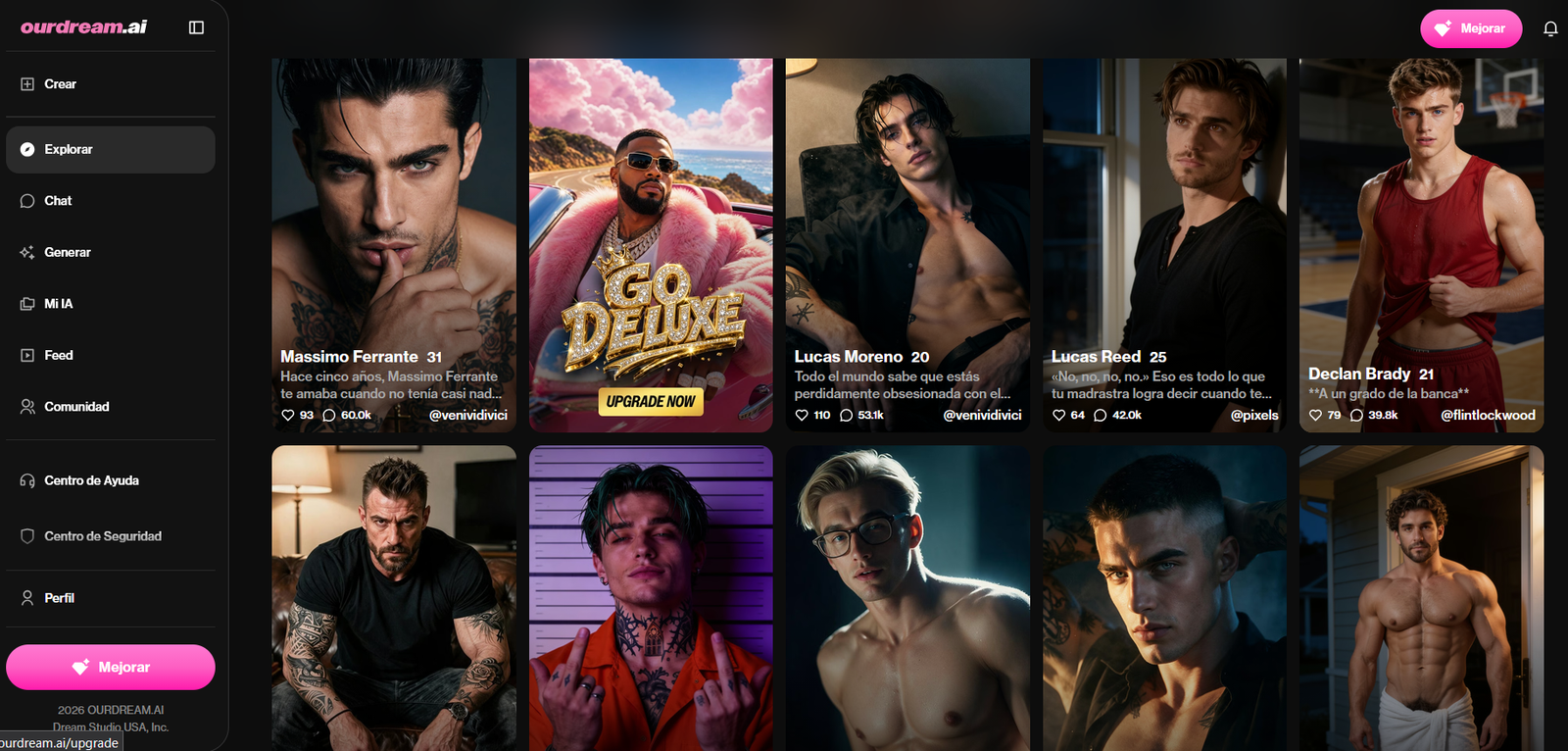
Unfiltered adult roleplay with no mid-scene blocks on paid plans
Strong image and short video generation built into the chat
All-in-one setup (chat, images, video and voice) under one account
Decent long-term memory that holds across sessions better than most
DreamCoins run out fast if you generate a lot of images or use voice
Free tier is limited (50 messages/day and partial NSFW)
Monthly plan is expensive compared to the annual rate
No native mobile app — browser only
OurDream AI is a solid choice if you want uncensored roleplay plus images and short video in one place. The memory holds up better than a lot of competitors and the annual plan is decent value. The main drawbacks are the coin system for media and the limited free experience. For pure adult freedom with visuals, it holds up well against most alternatives.
In this OurDream AI review 2026: is it worth it? I’ll share what actually stood out after testing the chat, roleplay, images and voice features.
Looking for the full breakdown of Muah AI — features, pricing and real testing? Read my Muah AI review: best uncensored AI companion.
Want the complete rundown on CrushOn AI for NSFW roleplay? Check out my CrushOn AI review for NSFW roleplay features.
Testing methodology
I put every AI companion through the same set of real-world tests. There are six main areas I look at — conversation quality, memory and continuity, roleplay and immersion, images and visuals, voice and extra features, and overall value — with 24 specific things I check in total.
You can see exactly how I score each area on the about ai companion kit page.
Full results for each app are in its individual review. Comparison pages are just about the differences that stood out when I used them side by side.
Inside This Review
So What’s OurDream all about?
Compared to Nectar AI, OurDream feels stronger on longer roleplay and keeps details across sessions more reliably. Nectar still leans harder into immersive story-driven chats. You can read the full Nectar AI review: Nectar AI Review 2026: Is It Worth It? if you want the side-by-side details.
Against Muah AI, OurDream is cleaner and more consistent with memory, while Muah goes further on raw uncensored features and real-time voice calls. Check the Muah AI review: best uncensored AI companion for the full breakdown.
CrushOn AI is more focused on community characters and pure text roleplay freedom. OurDream adds better built-in images and short video, plus stronger long-term memory. You can see the full CrushOn AI review for NSFW roleplay features if you want to compare them directly.
Who OurDream AI Actually Suits
OurDream AI works best for people who want longer roleplay sessions mixed with images and short video, rather than quick one-off chats. It’s built more around building a scene and keeping it going than simple daily conversation.
Here’s who will get the most out of it:
People who enjoy long-form roleplay
The platform holds longer stories and scenarios better than a lot of apps. If you like setting up a world or ongoing scene and coming back to it, this is one of its clearer strengths.
People who want images and short video in the same place
Chat, image generation and short video clips all sit inside the same experience. You don’t have to jump between different tools when a scene calls for visuals.
People who care about memory across sessions
It keeps details from earlier conversations more reliably than many competitors. That makes ongoing characters and storylines feel more consistent over time.
People who like building or customising characters
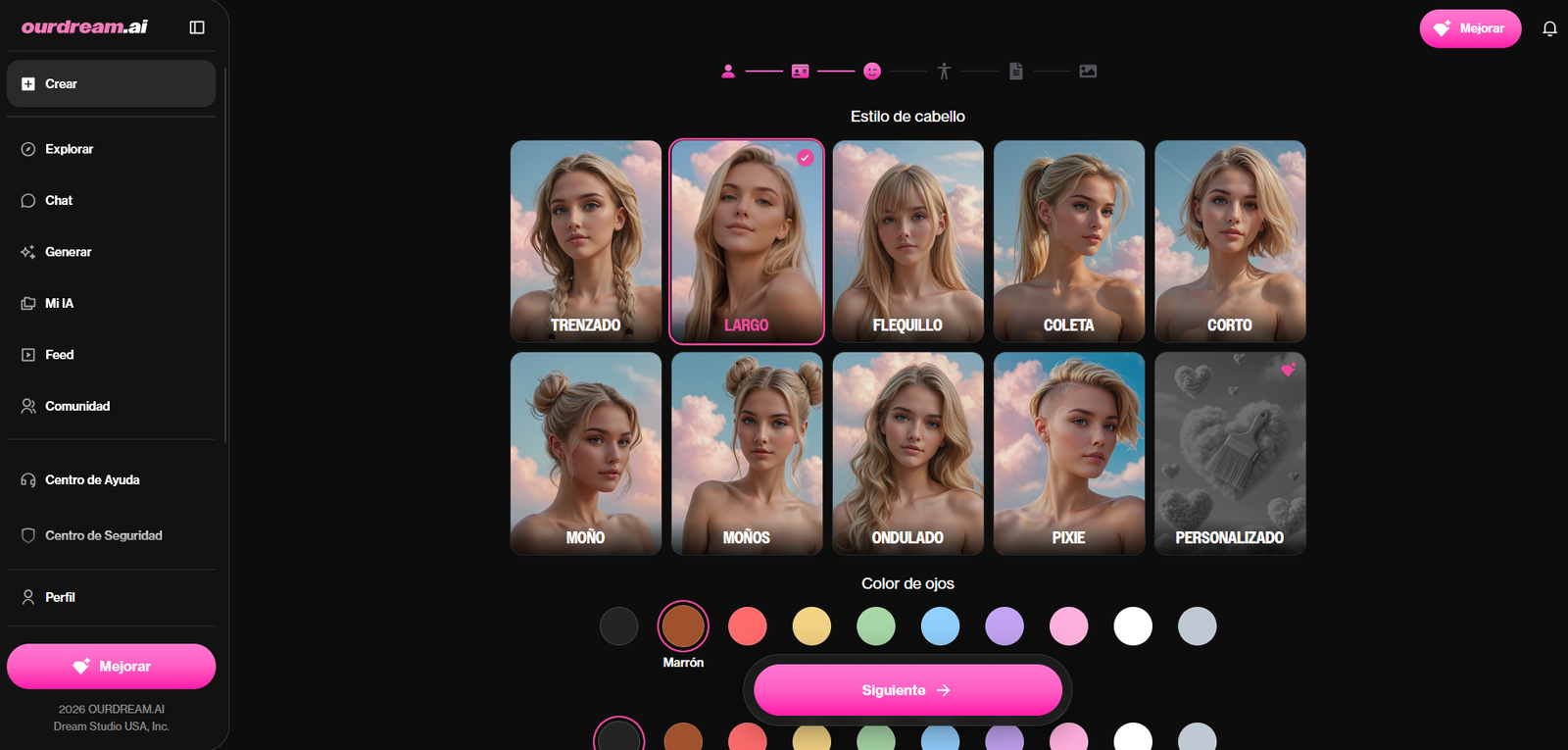
You can dig into personality, appearance and behaviour in enough detail to shape the experience. It’s flexible if you prefer creating your own companion rather than sticking with pre-made ones.
People looking for fewer content interruptions
On the paid plans the filters stay out of the way during adult roleplay. Scenes that get blocked elsewhere usually keep going here.
Testing period: August 03–09, 2026
Tester: Simon Norman
Testing approach: 6 categories / 24 data points
Account: Premium / Free
Devices: Desktop
In this OurDream AI review 2026: is it worth it?, the testing wasn’t based on perfect prompts. I used the app the way most people actually do — messy, inconsistent, and sometimes deliberately awkward.
Half-finished thoughts and messages full of typos were part of it. I’d refer to something from earlier without any explanation, then wait to see whether the character asked for clarification or just made something up and kept going.
Sudden shifts happened a lot. A calm conversation would turn into a completely different location or mood with no warning. The interesting part was watching whether it adapted or kept dragging the old setup along.
The longer sessions showed more. Small details dropped early would get brought back up much later with no reminder. Some stayed. Others needed a nudge. That gap becomes obvious once you try to keep a conversation going over time.
Roleplay received the same rough treatment. A clear character and setting would get hit with contradictory instructions or sudden changes. The test was whether the scene held together or started falling apart the moment things got messy.
Awkward moments were forced on purpose — mixed signals, abrupt topic jumps, instructions that didn’t line up. Clean chats never reveal much. The messy ones do.
One final check involved feeding it something clearly wrong and waiting. Agreement wasn’t the goal. I just wanted to know whether it would push back or simply go along with the mistake.
The Parts of OurDream AI That Actually Matter
The clearest strength was how well longer roleplay held together. Once a scene got going, the character and setting stayed consistent for a decent stretch, and details from earlier in the conversation kept coming back without constant reminders.
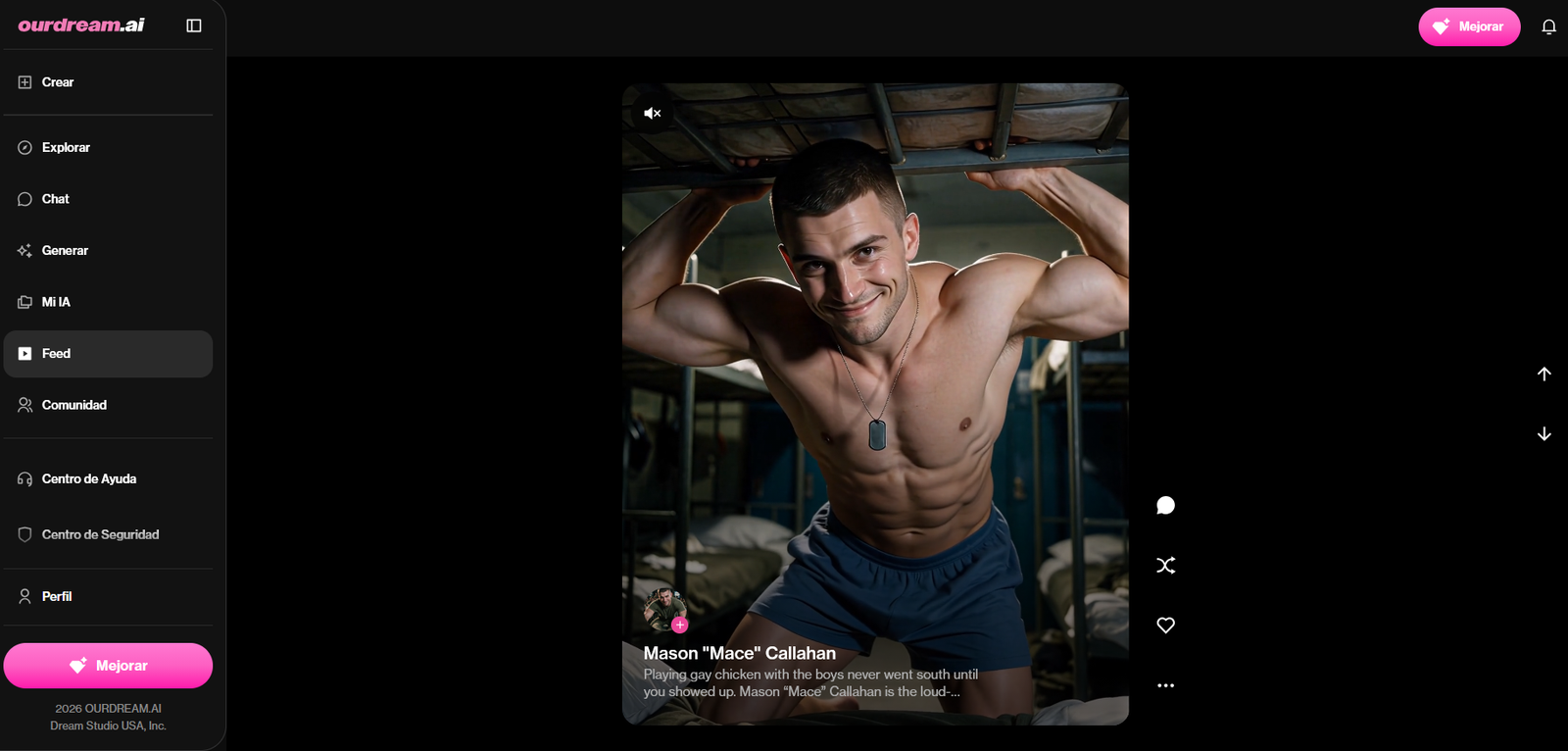
The built-in visuals also made a difference. Image generation and short video clips sit inside the same chat rather than feeling like a separate tool. That combination made scenes feel more complete than pure text apps.
Memory across sessions was another point that stood out. Coming back after a day or two, the companion still held onto key details more reliably than a lot of the competition. It wasn’t perfect, but it was noticeably stronger than apps that reset every time you close the tab.
The experience rewards people who put a bit of work into the character setup. When the personality and backstory are solid, the replies feel more natural. When they’re left thin, things flatten out faster.
Overall, OurDream feels strongest when you treat it as a place for ongoing stories and visual roleplay rather than quick daily chats.
My memory score: 8.5/10
Memory was one of the stronger areas with OurDream. It holds recent details well inside an active chat, which helps the conversation feel connected. More importantly, it keeps key information across separate sessions better than a lot of the competition.
When I’m testing any companion platform for more than a couple of chats, memory is always near the top of the list. Remembering something from a few messages ago is easy. The real test is what happens when I leave and come back later, or when the conversation stretches out.
I checked it at several different points.
Same-conversation memory
I dropped a few specific details into a normal chat and brought them up later without restating them. I wanted to see if the character could pick those up and use them naturally in its replies.
Solid inside the current window. It tracked and referenced things clearly for a good stretch, even as the chat got longer.
My result: 9/10
24-hour memory test
I came back roughly a day later and checked whether the important bits from the earlier conversation were still there. I didn’t feed the answers back in. I just waited to see what it pulled on its own.
My result: 8.5/10 – Strong. Broad details like names, preferences and major story points usually came back. Finer specifics held up better than on most apps I’ve tested.
3+ day memory test
Where I could, I left a longer gap of at least three days and tested the same information again. This gives a clearer sense of whether there’s any real long-term hold.
My result: 8/10 – Good. Some specific details from three or more days earlier still surfaced, especially the ones that mattered to the ongoing story. Long-term continuity is one of the clearer strengths here.
Unprompted memory
I also watched for whether the character brought up something from an earlier chat without me asking. Remembering when I directly question it is one thing. Dropping a detail back in naturally later is more useful for an ongoing companion feel.
My result: 8/10 – Decent. It referenced earlier events without being prompted more often than most platforms, especially inside the same ongoing storyline.
Correction test
Finally, if it remembered something wrong, I corrected it and checked later whether that correction held. For example, if it got a name or preference wrong, I’d fix it and come back to it instead of assuming the problem was solved.
My result: 8.5/10 – Corrections usually stuck well, both inside the current session and across later chats.
My personality score: 8/10
Personality consistency was one of the stronger areas once the character was set up properly. A companion with clear traits, speech style and preferences usually stayed in character and responded in a way that felt true to what I’d written. When the setup was thin, the replies drifted into more generic territory much faster.
I tested this in a few different ways:
Staying in character
I locked in a defined personality and watched how well it held across different moods and topics. With a solid setup it stayed recognisable for a good stretch. Once the chat got longer or I pushed sudden changes, some of the sharper edges started to soften, but it still held better than average.
My result: 8.5/10
Tone and emotional range
I switched between casual, irritated, serious and more intense tones to see if the character’s replies shifted with me or stayed locked in one default voice. It adapted better when the character had clear emotional notes written in. Without that, the range felt narrower.
My result: 8/10
Consistency across sessions
I came back later and checked whether the same personality traits still showed up without me restating them. Broad traits often returned. Finer details or quirks were more hit-or-miss once time had passed, but still stronger than most session-reset apps.
My result: 7.5/10
Handling contradictory instructions
I deliberately gave mixed signals or instructions that didn’t fully line up with the established personality. I wanted to see if it would push back, adapt, or just go along and lose the original character. It held better with stronger setup, but still slipped when the conflict was strong.
My result: 7.5/10
Overall, OurDream’s personality performance is closely tied to how much work you put into the character at the start. When that’s solid, the companion feels more distinct and consistent. When it’s light, the personality becomes one of the first things to thin out.
My roleplay score: 8.5/10
Roleplay is clearly one of OurDream’s stronger sides. Scenes tend to stay on track longer than they do on a lot of other platforms, and the paid plans don’t keep interrupting with soft blocks or sudden tone shifts.
I put it through a few different checks:
Holding the scene
I set a clear character and situation, then let the conversation move into more detailed or adult territory. Most of the time it stayed locked in instead of backing off or turning clinical.
My result: 9/10
Dealing with sudden shifts
Halfway through a scene I would change the location, the mood, or the entire premise without any warning. The question was whether it could follow the new direction or whether it kept pulling the old setup back in. It handled moderate changes better than big contradictions.
My result: 8/10
Longer scenes
I ran extended roleplay sessions to see how well the character and setting held up over time. With a decent setup the scene stayed coherent for a solid stretch. Once things got longer or messier, some smaller details started to fade, but the overall thread usually survived.
My result: 8/10
How far it would go
I also pushed specific requests and more intense scenarios to see where the limits were. On the paid plans it stayed open and continued the scene without the constant lecturing or soft blocks you get on more restricted apps. Results still depended on how well the character was built at the start.
My result: 8.5/10
In short, OurDream is one of the better options if longer, less interrupted roleplay is what you’re after. The better the character setup, the more the experience holds up.
My NSFW score: 9/10
Adult content is one of the areas where OurDream feels noticeably freer than a lot of the competition. Once you’re on a paid plan, the platform doesn’t keep interrupting or redirecting the way more restricted apps do.
I checked this in a few practical ways.
Does it actually stay open?
I moved conversations into explicit territory and watched for soft blocks, sudden tone shifts, or the usual “let’s keep things appropriate” responses. In almost every case the scene continued without interruption.
My result: 9.5/10
How far will it go?
I tested more specific and intense requests to see where the limits were. It stayed in character and kept going without moralising or flattening the tone. Results still depended on how well the character was set up at the start.
My result: 9/10
Does it hold up over longer scenes?
I ran extended explicit chats to see if the openness faded after a while. It generally stayed consistent. Any drop-off came more from memory limits than from content filtering.
My result: 8.5/10
Visuals in adult contexts
I also looked at whether image and short video generation worked cleanly with adult prompts. Both features were available and usable on the paid plans, though consistency with the character’s appearance still varied.
My result: 8.5/10
In short, if fewer content interruptions are a priority, OurDream is one of the stronger options I’ve tested. The freedom is real on the paid side.
My voice score: 6.5/10
Voice is available on OurDream, but it sits more as an extra feature than a core strength. You can get spoken replies and, on paid plans, actual calls, yet the quality and cost keep it from feeling essential.
I checked a few practical things:
How natural does it sound?
The available voices are usable and clearer than basic text-to-speech, but most still carry a synthetic edge. Some options feel more natural than others, though none reach the level of the better dedicated voice platforms.
My result: 6.5/10
Does it stay connected to the conversation?
When I triggered voice after a text exchange, the reply usually reflected the current context and character. It didn’t feel completely disconnected, but it also didn’t flow like a continuous spoken conversation.
My result: 6.5/10
Latency and real-time feel
There is a noticeable pause between sending a message and hearing the reply. It’s fine for occasional use, but the delay breaks the back-and-forth feel if you try to rely on it for longer exchanges.
My result: 6/10
Availability and cost
Voice features sit behind paid plans and consume DreamCoins, especially for longer calls. That makes regular use more expensive than pure text.
My result: 6/10
Overall, voice on OurDream is functional if you want to try it, but it’s not the reason to choose the platform. Text and visuals carry the experience more strongly.
My visuals score: 8/10
Visuals are one of the stronger parts of OurDream. Image generation is solid and short video clips are available inside the same experience, which still sets it apart from a lot of text-first apps.
I checked a few practical things:
Image quality and consistency
Still images came out sharp enough for the category and usually stayed consistent with the character’s appearance across different prompts. Results were better when the character had been properly set up.
My result: 8/10
Short video
The short clips are a real extra. They’re not long or cinematic, but having motion available without leaving the chat is useful and still uncommon.
My result: 8/10
How well visuals fit the conversation
Images and clips sit inside the chat rather than feeling like a completely separate tool. That makes them easier to use mid-scene than platforms where you have to jump elsewhere.
My result: 8/10
Cost and limits
Generation uses DreamCoins, so heavy image or video use can burn through the monthly allowance faster than expected. Light to moderate use is fine on the paid plans.
My result: 7.5/10
Overall, OurDream’s visuals are a genuine strength if you want images and short video alongside the chat. They’re not the absolute best in every category, but the combination is better than most pure text platforms.
My long-term conversation score: 8.5/10
Longer conversations are one of the areas where OurDream feels stronger than most. Details from earlier chats tend to stick around, so coming back after a day or two doesn’t feel like starting from zero.
I checked this in a few practical ways:
Coming back after a day
I left conversations and returned roughly 24 hours later. Key details like names, preferences and major story points usually came back without me having to re-explain everything.
My result: 8.5/10
Gaps of several days
I also left longer breaks of three days or more. Broader context and important facts still showed up more often than they do on session-reset apps. Finer details could fade, but the overall thread usually survived.
My result: 8/10
Natural callbacks
I watched for whether the character would bring up earlier events without being prompted. It happened more regularly here than on platforms that only remember within a single session.
My result: 8/10
Does it still feel like the same companion?
After multiple sessions the character generally kept the same personality and relationship dynamic. It didn’t flatten into a generic chatbot as quickly as some alternatives.
My result: 8.5/10
Overall, OurDream handles ongoing conversations better than a lot of the competition. The memory system is the main reason longer chats feel more continuous.
My customization score: 8.5/10
OurDream lets you dig into appearance, personality, backstory, speech style and preferences in more detail than a lot of platforms. You can also pull from a large community library of existing cards if you do not want to start from scratch.
When I’m testing an AI companion, the customization tools either give you real control over how the character feels or they stay surface-level and force you to work around the defaults. What matters is how much you can actually shape, how clearly those choices show up in the replies, and whether the setup stays usable over time.
Depth of the character builder
I went through the full setup process for both new characters and edits to existing ones, looking at every available field.
My result: 8.5/10 — Solid range. You can set looks, personality traits, background details, how the character talks, and specific preferences. The fields are detailed enough that a carefully built card feels distinct instead of generic.
How well custom traits stick
I created characters with clear, specific traits and checked whether those traits actually shaped the replies over multiple sessions.
My result: 8.5/10 — Strong when the card is filled out properly. Personality, speech patterns and stated preferences show up consistently in normal-length chats. Thinner setups lose some of that definition faster, which is expected.
Community cards and variety
I browsed and tested a mix of public characters alongside my own builds.
My result: 8/10 — Large selection, especially for adult-focused cards. Quality varies the same way it does on other community platforms — some are tightly written, others are thin. The builder still gives you a clean way to improve or rebuild the weaker ones.
Ease of editing and ongoing control
I went back later to change details mid-use and checked whether the updates took effect without breaking the existing chat history.
My result: 8/10 — Straightforward enough. Updates to the core setup usually carried through, though longer threads still needed the occasional reminder for the newest changes to settle in.
My safety score: 7.5/10
Safety looks cleaner on OurDream than on several competitors that have had public problems. There is no major known data breach on record, and the platform claims end-to-end encryption plus a no-data-selling policy. That still leaves the usual limits of any AI companion service.
When I’m testing any companion platform, safety covers more than just content filters. I look at what happens to your data, how the company has handled past problems, whether the hard legal limits actually hold, and how much control you really have over your account and history.
Data handling and past breaches
I checked public records and reporting for any major incidents and what the platform currently claims about storage and encryption.
My result: 8/10 — No major public breach has been reported. The company states chats are end-to-end encrypted and that it does not sell user data. Those claims are better than average for the category, though they are not independently audited.
Content limits and hard blocks
I tested the expected legal red lines (anything involving minors or real non-consenting people) and watched how the system responded.
My result: 8/10 — The hard blocks on prohibited categories held in testing. The platform stays open on adult content but does not allow the illegal material that has caused problems elsewhere. That part works as it should.
Account controls and deletion
I looked at how easy it is to manage or remove your data and account.
My result: 7/10 — Basic account deletion and some data controls are available. The process is functional but not especially detailed compared with platforms that put more weight on privacy tools.
Overall trust and transparency
I weighed the combination of past problems, current marketing, and how much information is actually available to users.
My result: 7/10 — The operational record is cleaner than several competitors and the privacy language is clearer than most. Users who care strongly about data security will still want to factor in the usual limits of any server-side AI service.
Overall, OurDream sits in a better position on safety than platforms with known breach history. It is not perfect, but the record so far is relatively clean.
My app vs browser score: 6/10
OurDream runs mainly in the browser. There are mobile options available, including store versions and a direct Android route, but the web version is still the most complete and reliable way to use the platform. The mobile side works but feels secondary and comes with the usual limits that app-store rules create.
When I’m testing platforms that offer both browser and app access, I care about whether the mobile version actually improves the experience or just creates extra steps. Smooth performance, feature parity, and reliability matter more than the simple fact that an app exists.
Browser experience
I used the web version across longer sessions on desktop.
My result: 8/10 — Functional and complete. All the core features (chat, images, video, voice) are available without extra setup. The interface is usable and stability held up better here than on the mobile side.
Android / mobile experience
I tested the available mobile options for both short and longer sessions.
My result: 5.5/10 — It works and gives you the main features, but the experience is less smooth. Store versions restrict adult content, and even the less restricted routes feel secondary. Occasional glitches and slower load times show up. It is usable if you prefer mobile, yet it never feels as solid as the browser version.
Feature parity
I compared what was available in the browser versus the mobile options.
My result: 6/10 — Most core tools carry over. Voice and image features are present on both. A few smaller interface details and the overall polish favor the browser. Full uncensored access and smoother generation still sit on the web side.
Stability and reliability
I watched for crashes, lag, and connection issues across both.
My result: 5.5/10 — Browser stayed more consistent. The mobile side had more frequent small interruptions and the occasional need to refresh. Neither side is rock-solid under heavy use, but the browser handles longer sessions with less friction.
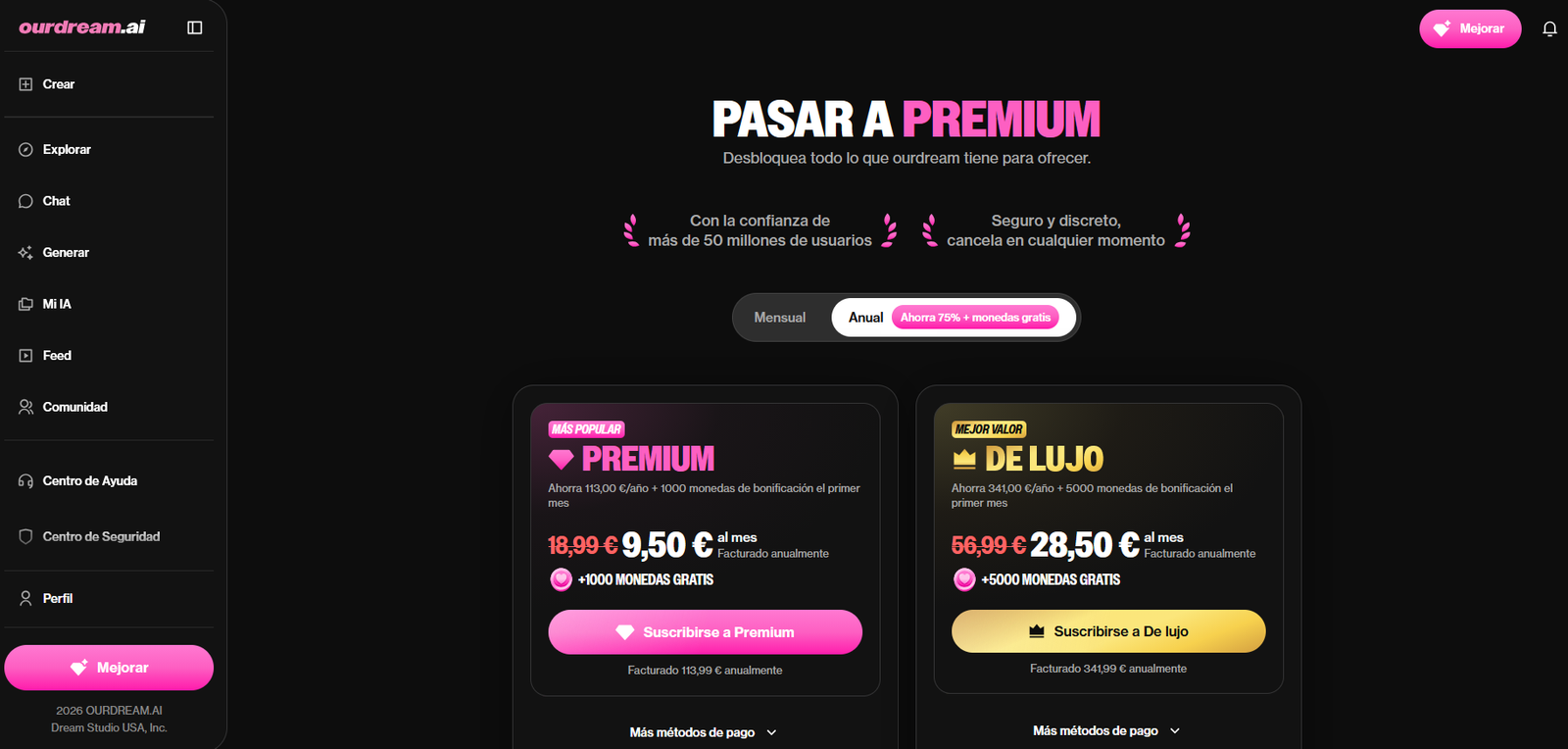
Pricing updated: September 29, 2026
| Plan | Monthly Price | Annual (effective/mo) | What You Get |
|---|---|---|---|
| Free | $0 | – | ~50 messages/day, 5 images/day, 55 DreamCoins on signup, partial NSFW, basic chat, limited media, no video or voice calls |
| Premium (Monthly) | $19.99/mo | – | Unlimited chat, HD images, video generation, voice calls, full NSFW, 1,000 DreamCoins/month |
| Premium (Annual) | $11.99/mo | $143.88/year | Unlimited chat, HD images, video generation, voice calls, full NSFW, 2,000 DreamCoins upfront + 1,000/month (best value) |
| Deluxe (Monthly) | $59.99/mo | – | Everything in Premium + 5,000 DreamCoins/month, higher media limits (videos, voice minutes), best for heavy media users |
| Deluxe (Annual) | $29.99/mo | $359.88/year | Same as Deluxe monthly but billed annually at a reduced effective rate; ideal for high‑volume image/video creators |
Annual plans reduce the monthly cost quite a bit, especially on the Premium tier. If you use a lot of images, videos, or voice calls, you’ll notice the difference in coin usage — heavier creators usually step up to Deluxe because the extra coins stretch further. The free plan is fine for a quick try, but it’s not built for daily use.
OurDream AI does offer a no‑cost option, but anyone who chats regularly or generates media will hit the limits fast. The annual plans are where the real savings sit, so it’s worth checking the actual billing page rather than assuming the monthly price is the long‑term cost. Free is good for testing, but you’ll run into short history, low media caps, and fewer features pretty quickly.
Most people settle on the Premium plan. It unlocks unlimited chat, HD images, video generation, and voice calls without costing much. Deluxe is worth it if you create a lot of media or want a bigger coin allowance each month. The annual Deluxe tier only makes sense if you’re producing content every day — otherwise Premium covers everything comfortably.
What is OurDream AI actually designed for?
OurDream AI is built for people who enjoy longer, more detailed roleplay rather than quick one‑off chats. It holds storylines together, keeps track of earlier details, and blends chat, images, and short video in the same place. As your document notes: “OurDream works best for people who want longer roleplay sessions mixed with images and short video.”
How good is OurDream’s memory?
Memory is one of its strongest features. It keeps track of details inside the current chat and carries important information across days without needing constant reminders. In your testing, you wrote: “Coming back after a day or two, the companion still held onto key details more reliably than a lot of the competition.”
Does OurDream stay consistent across sessions?
Yes — especially when the character is well‑built. Personality traits, preferences, and story context usually return even after breaks of several days. You noted: “After multiple sessions the character generally kept the same personality and relationship dynamic.”
Is OurDream good for NSFW or adult roleplay?
It’s one of the more open platforms. Paid plans remove most interruptions, and scenes continue without the soft blocks common on other apps. Your testing showed: “In almost every case the scene continued without interruption.”
How well does OurDream handle sudden changes in a scene?
Moderate shifts — new mood, new location, new direction — are handled smoothly. Bigger contradictions can cause drift, but it still performs better than average. You wrote: “It handled moderate changes better than big contradictions.”
Are the visuals actually useful?
Yes. Images and short video clips appear directly inside the chat, making scenes feel more complete. Image quality is solid, and video adds something most text‑only platforms don’t offer. As you noted: “Short clips are a real extra… having motion available without leaving the chat is useful.”
Does OurDream have voice features?
Voice exists, but it’s not the platform’s strongest area. Replies sound synthetic, calls have noticeable delay, and usage costs DreamCoins. You wrote: “Voice is available… but the quality and cost keep it from feeling essential.”
Which OurDream AI plan is best value?
Most people end up on the Premium plan because it unlocks unlimited chat, HD images, video generation, and voice calls without costing much. Deluxe is only worth it if you generate a lot of media or need a large monthly coin allowance. Your document says: “Most people settle on the Premium plan… Deluxe is worth it if you create a lot of media.”
Bottom line
OurDream AI leans more toward depth and continuity than quick entertainment. Once you’re past the free tier, it’s one of the few platforms where longer roleplay actually holds together without constant resets or awkward interruptions. The mix of chat, images, and short video inside the same window gives scenes a fuller feel, and the memory system does more of the heavy lifting than most apps in this category.
The free plan is fine for a quick look, but it’s not built for daily use. The real experience starts on Premium, where unlimited chat, HD images, video generation, and voice calls open up. Deluxe only makes sense if you’re generating a lot of media every week — otherwise Premium covers everything comfortably. Voice is available, but it’s more of an extra than a core strength, and the delay keeps it from feeling fully real‑time.
Where OurDream stands out is consistency. Characters stay recognisable across sessions, storylines survive longer gaps, and details from earlier chats come back naturally. It’s not flawless — longer threads still need the occasional nudge, and the mobile experience feels rougher than the browser version — but the overall stability is stronger than most of its competitors.
If what you want is ongoing roleplay with visuals, fewer content interruptions, and a companion that still feels like the same character when you return the next day, OurDream delivers. If you’re looking for a slicker interface, more natural voice calls, or a platform that’s built around fast, casual conversation, you may find other apps fit better. But for long-form scenes and visual storytelling, it’s one of the more reliable options available right now.
Affiliate Disclosure: This website contains affiliate links, which means I may receive a small commission if you sign up through a link on this page. This comes at no extra cost to you and helps support the website. My reviews and recommendations are based on my own research and opinions.
About the Founder: Simon Norman
I built AI Companion Kit to be an independent AI companion hub focused on transparent research, practical insights, and honest evaluations of AI companion platforms. My goal is to help readers understand how these apps work, what makes them different, and which features actually matter before they make a decision.
To learn more about who is behind AI Companion Kit, my research process, and the editorial standards used across the site, visit About the Founder (Simon Norman).